Léon Chaillot Export · France 中文 Contact the export desk

Charcuterie: a family business since 1947

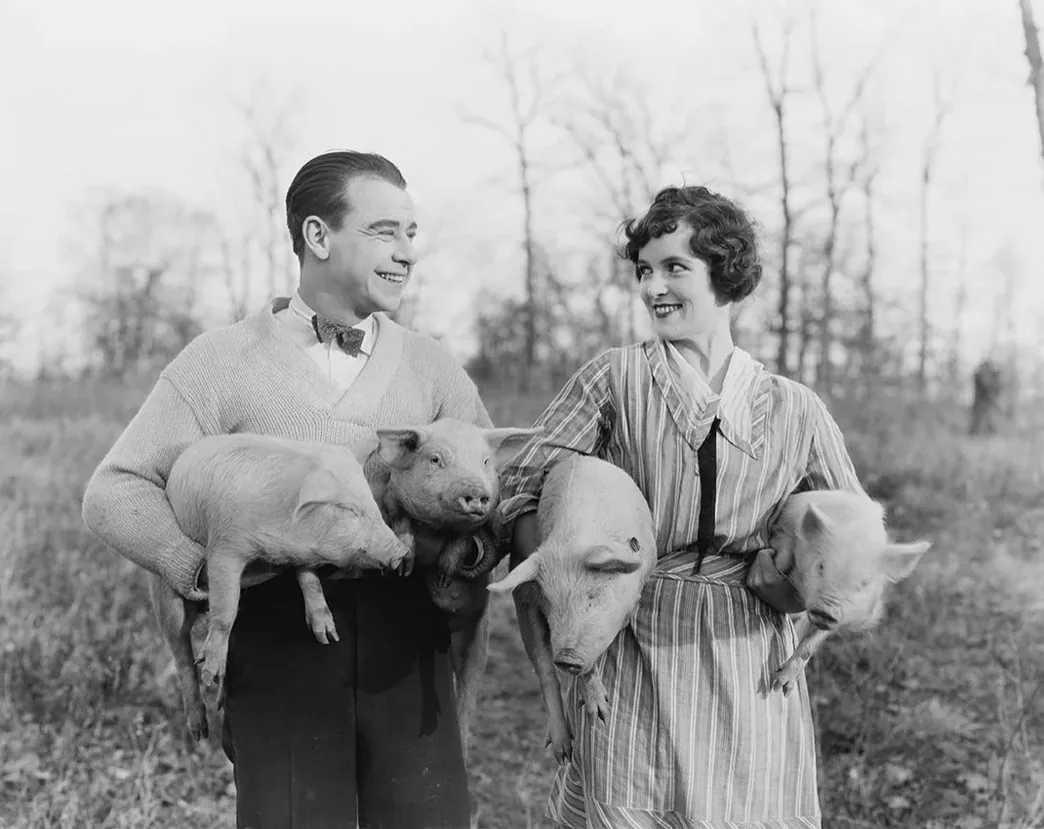
Our history began in the 1870s, when the Chaillot grandfather traded live pigs in the hills of Ardèche. In 1947, his four grandsons, Jean, Camille, André and Marcel, opened a 60 m² workshop in Ardèche and began curing the meat themselves.

PL. 01 Historical photograph of the Chaillot family with piglets in a field.
The Chaillot family in Ardèche. The business remains family-owned today.

01

Key milestones

Our history in three milestones

  1. 1870s

    Livestock trading

    The Chaillot grandfather trades live pigs across the region, learning the trade from local farms.

  2. 1947

    The first workshop

    Four brothers open a 60 m² workshop in Ardèche and begin making the charcuterie themselves.

  3. Today

    A team of 30

    A team of 30 people carries the same recipes forward under Georges Champeix, who spent more than thirty years raising pigs in the Cantal before taking over the business.
02

Who runs it

Led by an experienced farmer

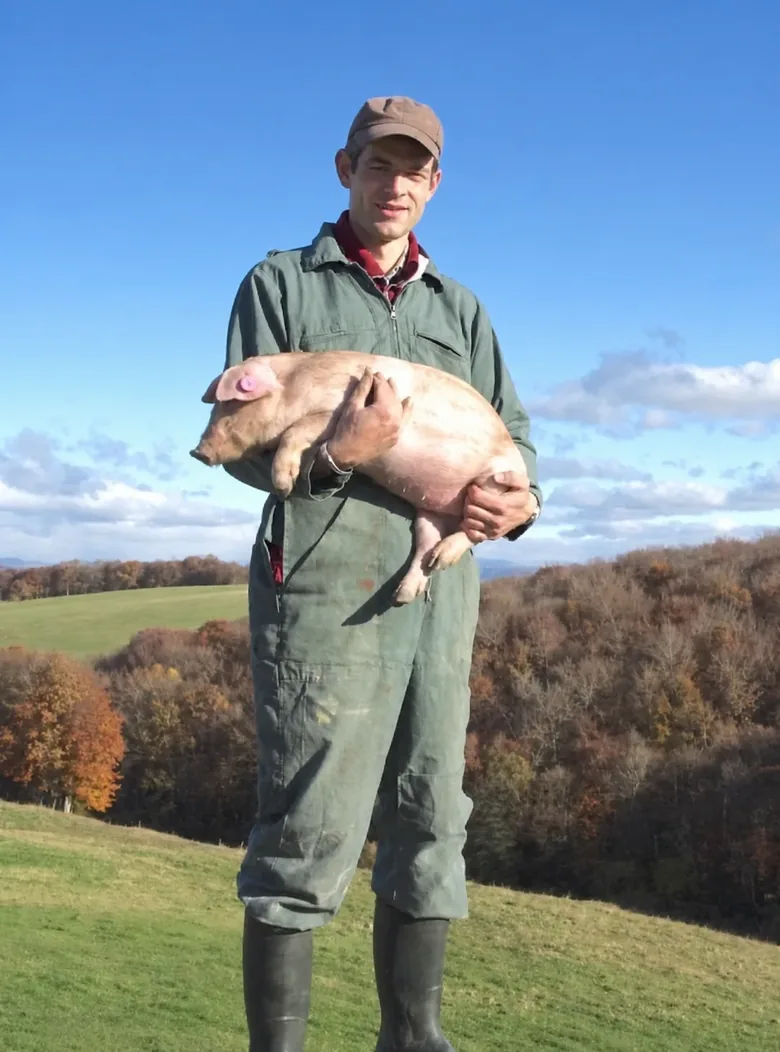
PL. 02 A farmer holding a piglet in a mountain field.
Supplied farm photograph, technically enhanced with AI for web resolution.

Georges Champeix spent more than thirty years raising pigs in the Cantal before taking over the business. He still brings a farmer's eye to the choice of meat: he knows the farms, understands the value of a carcass and pays mountain producers a premium per kilo.
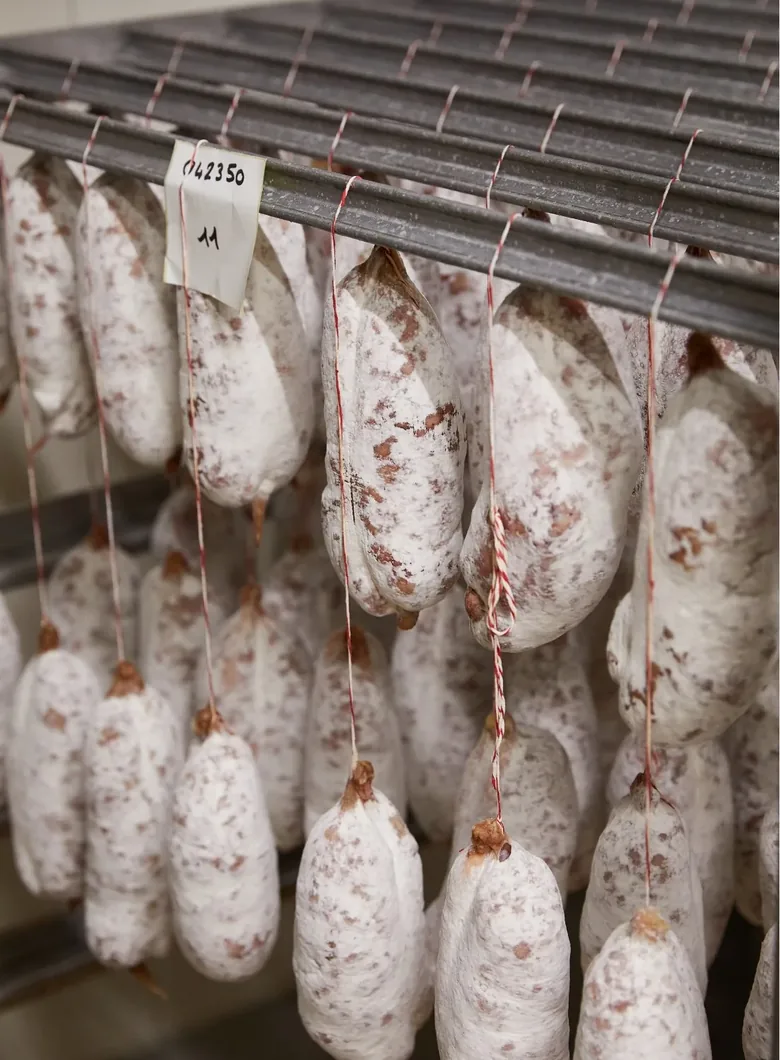
That is why the meat is never frozen and the drying is never rushed. This slower process is central to the product.

03

The making

Four stages, each given the time it needs

After étuvage, each piece spends several weeks in the drying rooms. The natural bloom and the aroma that develop during drying are part of the finished product.

  1. 01

    Selecting the meat

    We use fresh, traceable cuts of shoulder, back fat, ham, chine and belly from French farms.

  2. 02

    Cutting and mixing

    The meat is cut, seasoned according to family recipes and rested so the flavours can develop.

  3. 03

    Hand-filling the casings

    We fill each casing by hand, then tie each piece and prepare it for drying.

  4. 04

    Étuvage and slow drying

    The curing process develops naturally, followed by slow drying in the drying rooms over several weeks.

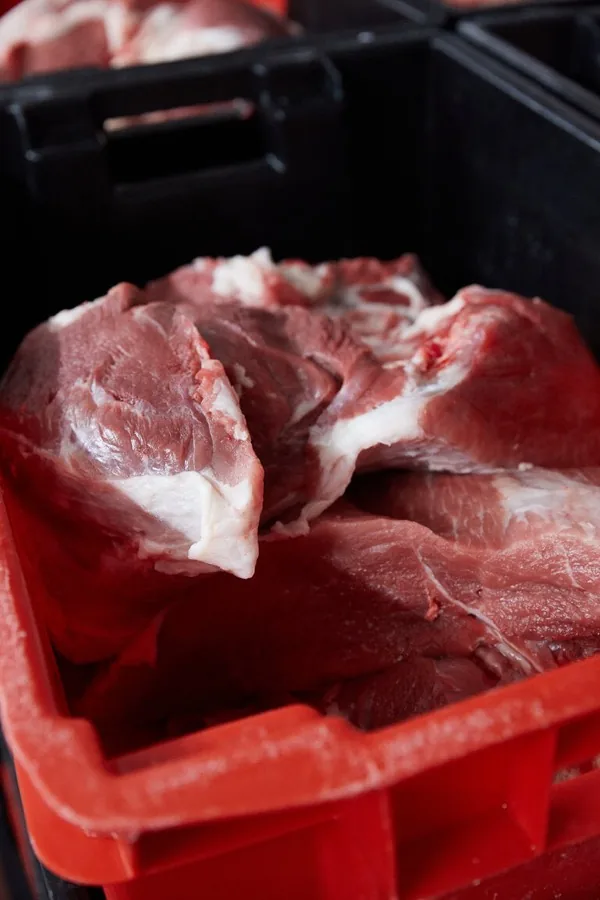
PL. 03 Fresh cuts of French pork in a crate before mixing.
Never-frozen French pork, on arrival.
PL. 04 Racks of saucissons developing their natural bloom in the drying room.
Natural bloom developing in the drying room.
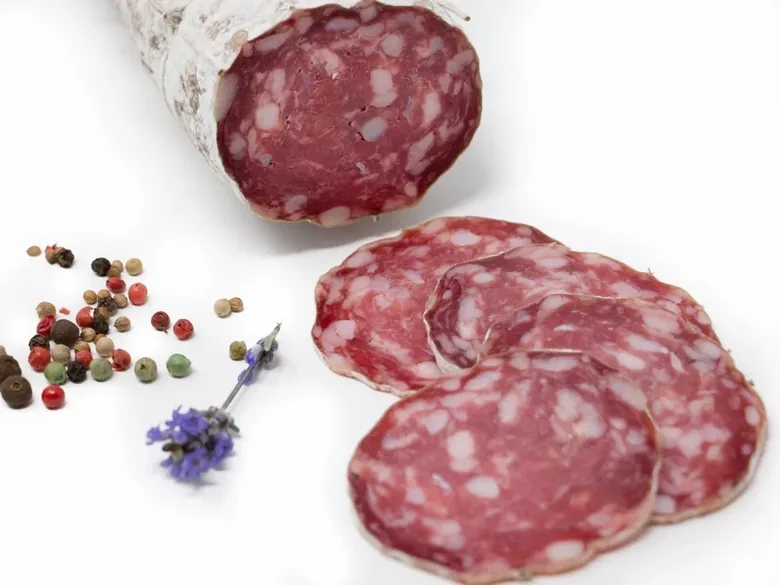
PL. 05 Sliced dry saucisson with peppercorns.
The cut that shows the quality of the piece.

04

Quality standards

Internal controls backed by certification

Quality assurance

Our team monitors each production from preparation through dispatch. The business is ISO 22000-certified for food safety management and recognised as a quality producer and artisan by the Collège Culinaire de France.

ISO 22000 · since 2018 Collège Culinaire de France